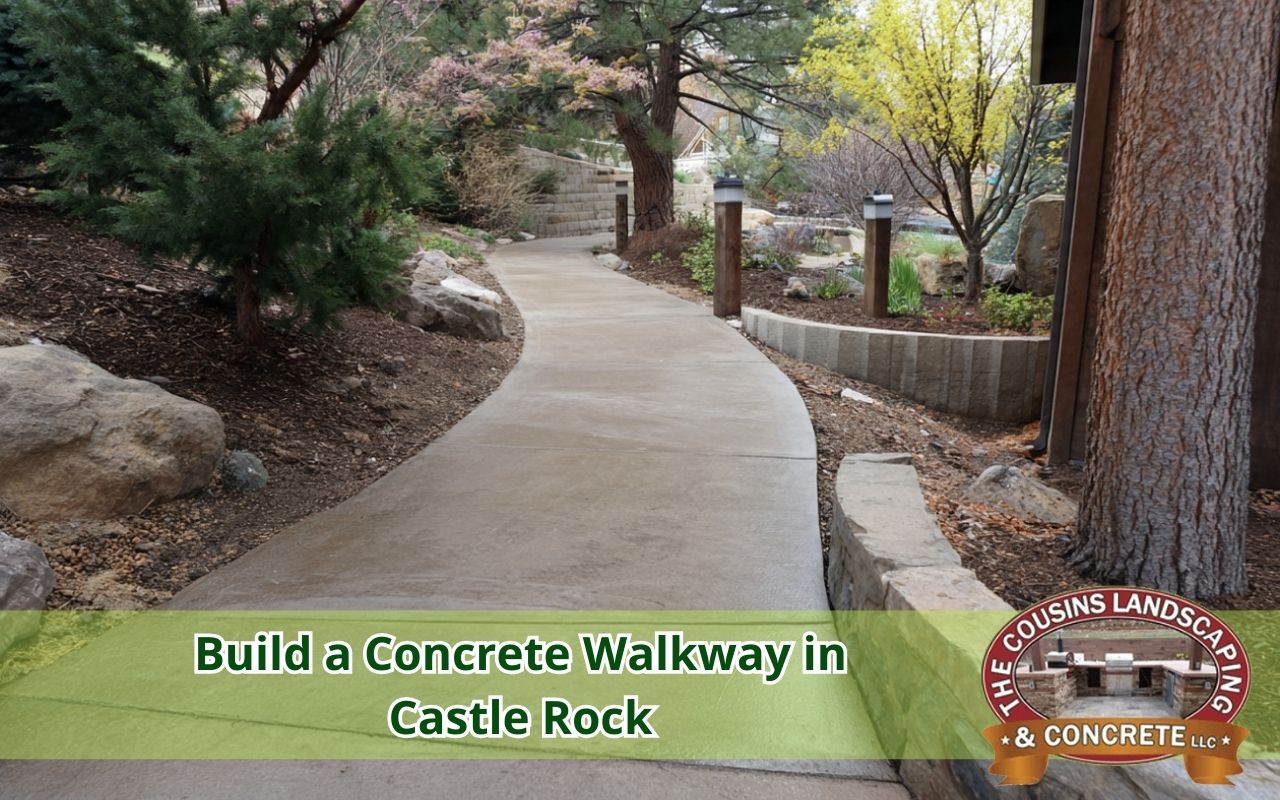
A Concrete Walkway in Castle Rock is more than a path. Instead, it can guide guests and shape how your yard feels. Still, Castle Rock brings hot sun and icy winters, so smart choices matter.
Therefore, plan for strength, grip, and long life. Also, learn winter steps that protect the surface and keep every walk safe.
Materials That Last for a Concrete Walkway in Castle Rock
Castle Rock has hot summers and freezing winters. Because of that, pick a mix made for freeze-thaw swings. Air-entrained concrete helps, since tiny air pockets give water room to expand.
Also, ask for blends with silica fume or fly ash. These can boost strength and cut moisture entry, so the slab resists chipping and surface flaking.
- Choose air-entrained mixes for freeze-thaw stress.
- Ask for additives that lower water absorption.
- Consider fiber mix-ins to help limit cracking.
- Pick a finish that fits your traction needs.
Design Choices That Look Good and Work Well
Start by mapping the route, and then match it to how people move. Curves can soften the yard, while straight lines move traffic faster. Next, connect the path to patios, doors, and garden zones.
Additionally, borders in brick, stone, or contrasting concrete can frame the edge. Color pigments can also help the path feel planned, not added later.
- Use gentle curves to guide visitors naturally.
- Add borders to define the line and boost curb appeal.
- Pick textures that balance style and grip.
- Place joints to reduce random cracking.
Sealing and Finishing for a Concrete Walkway in Castle Rock
Sealing helps block stains, moisture, and winter damage. After the slab cures, apply an exterior sealer that fits your look. Acrylic sealers can enrich color, while penetrating sealers can block water without changing the finish.
Meanwhile, the finish affects both safety and style. A broom finish adds grip, while stamped patterns can copy stone or brick looks with less upkeep.
- Seal after curing to limit water and stain entry.
- Match sealer type to your desired appearance.
- Re-seal every few seasons based on wear.
- Choose a finish that supports safe footing.
Winter Safety Without Surface Damage
Winter safety often means melting ice fast. However, some salts can rough up concrete and leave marks. So, pick de-icers safe for concrete and apply them lightly.
After thawing, sweep away leftovers to limit long contact. As a result, the walkway stays safer while the surface stays cleaner.
Grip Tools You Can Add Quickly
For quick footing help, use Traction sand on slick spots. Then, sweep it up once the ice is gone, so grit does not build up.
You can also place Mats near doors and car exits. This keeps meltwater off the slab and reduces slips in high-step areas.
Simple Care That Extends Service Life
Routine care keeps the surface clean and steady. First, sweep often to remove debris that holds moisture. Next, rinse after winter to clear leftover melt products and grit.
Also, check for small cracks twice a year. Fill them early, and they are less likely to spread during freeze-thaw cycles. With small checks, your Concrete Walkway in Castle Rock stays strong and neat longer.
- Sweep dirt and leaves to reduce trapped moisture.
- Rinse in spring to clear winter residue.
- Patch small cracks before they widen.
- Trim plants so roots do not lift edges.
Decorative Options That Add Character
Decorative choices can turn a plain path into a focal point. For example, acid stains can create rich tones that blend with beds and stonework. Since stains soak in, they do not peel like paint.
Additionally, exposed aggregate can show pebbles for texture and sparkle. Stamped patterns can also mimic tile, slate, or brick for a custom look.
DIY or Pro Help: Picking the Right Path
DIY work can feel rewarding, yet it takes tools, time, and steady timing. Poor leveling or slow finishing can shorten the life of the slab. Therefore, weigh the learning curve and the risk of rework.
On the other hand, pros know local conditions and can manage prep, pour, finish, and sealing smoothly. If you want expert support, explore concrete services in Castle Rock for outdoor projects.
Planning Costs Without Cutting Corners
Costs depend on size, layout, and finish choice. Straight, simple paths are often easier to build than winding designs with patterns. Also, site prep and old surface removal can add time and effort.
To plan smarter, decide what matters most: traction, design detail, or long-term ease. For related outdoor upkeep ideas, review seasonal patio maintenance steps.
Frequently Asked Questions
What concrete mix works best for freeze-thaw weather?
Air-entrained mixes are a strong choice, because they handle water expansion during freezing. Also, blends with low permeability help keep moisture out, which can reduce surface damage over time.
Which finish is safer in snow and light ice?
A broom finish is often safer, since it adds texture for grip. However, some stamped finishes can work well if they include enough texture and are sealed properly.
How often should an outdoor walkway be sealed?
Many owners re-seal every two to three years. Still, wear, sun exposure, and winter use can change that. Therefore, watch for fading, dark staining, or water soaking in.
How can I match my walkway to other outdoor features?
Use pigments, borders, or patterns that echo nearby elements. For example, if you are debating shade cover styles, compare a pergola vs a covered patio in Colorado to align the look.
Should I choose stone-style patterns or a clean modern look?
Both can work, depending on your home style and maintenance goals. If you are also planning patios, it helps to weigh flagstone vs paver patio options for a consistent outdoor design.
Achieving a Concrete Walkway in Castle Rock You’ll Love
With smart materials, clean design, and steady care, you can build a path that handles sun and ice. Moreover, safe winter steps and regular sealing help protect the surface for years.
If you want your layout planned and built to fit your yard, reach out through the project contact form and share your goals and timeline.