
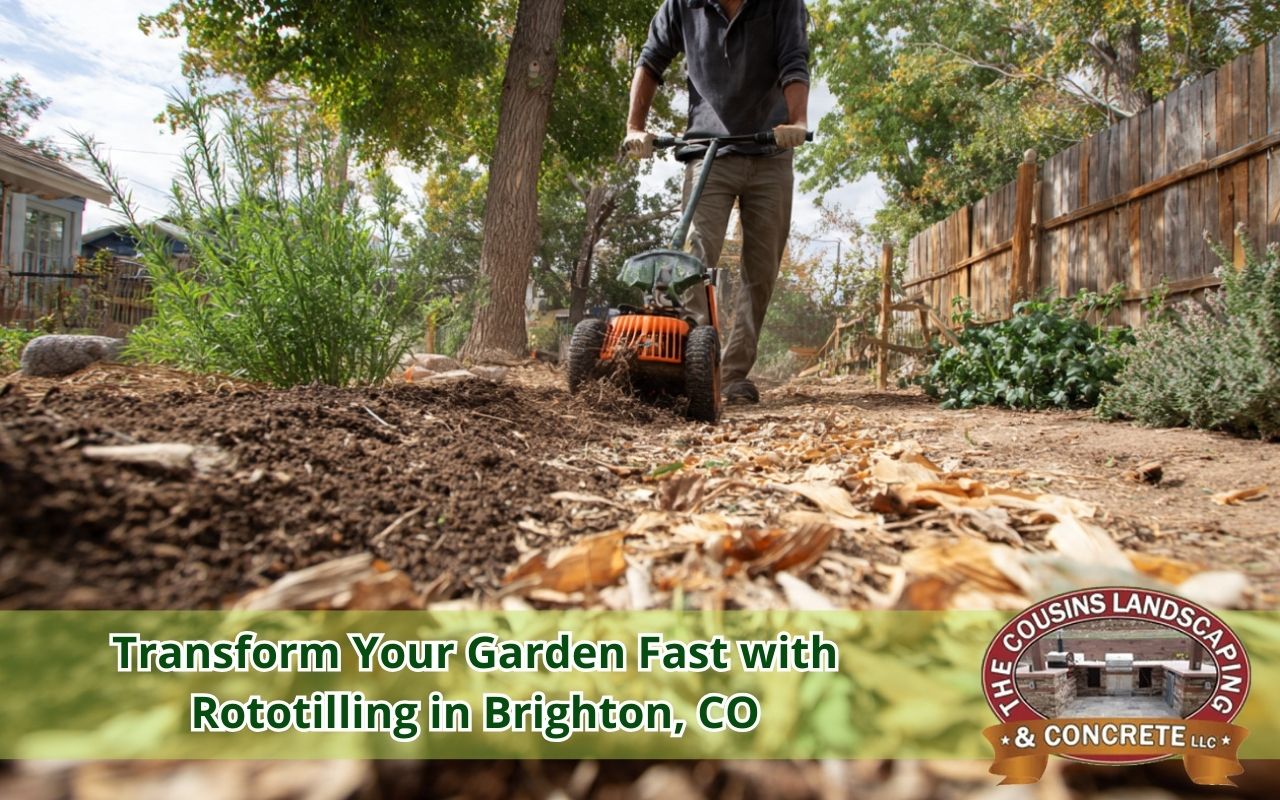
Digging into the world of gardening can feel overwhelming. However, Rototilling in Brighton, CO can change your results fast. In Brighton, CO, the soil can be tough, so the right tilling depth helps your garden bed come back to life.
Rototilling in Brighton, CO also works well when you add compost incorporation and smart grading. As a result, you improve soil quality and create a better home for roots. With the right approach, your garden can thrive with stronger plants and bigger harvests.
Why Rototilling Matters for a Healthier Garden
Rototilling in Brighton, CO helps break up compacted soil, which improves airflow and water movement. Because the soil becomes looser, roots can spread easier and reach nutrients faster. The Cousins Landscaping & Concrete LLC can help you choose a tilling depth that matches your soil and your planting goals.
In addition, rototilling supports better weed control and more even nutrient mixing. When you turn the soil, many weeds get buried, so crops face less competition. Over time, this process also supports soil life that improves structure naturally.
- Loosens compacted soil for better root growth
- Improves water infiltration during short rain events
- Helps mix organic matter more evenly
- Reduces weed pressure in planting areas
If you want to understand what professional service includes, explore rototilling services in Brighton, Colorado for a practical overview of what to expect.
Understanding Brighton, CO Soil and How It Affects Results
Soil in Brighton often includes sandy loam mixed with clay. While it can drain well, it can also harden after dry weather. Therefore, testing your soil helps you decide how much compost incorporation is needed before you till. The Cousins Landscaping & Concrete LLC often recommends adjusting tilling depth based on what sits below the surface.
Grading also matters because it helps water flow the right way. When grading is done well, water moves away from roots and avoids pooling. As a result, plants stay healthier and you reduce the chance of rot.
- Check texture to spot clay-heavy layers
- Review pH and nutrient levels before amending
- Use grading to prevent puddles near roots
- Combine compost incorporation with even leveling
Picking the Right Rototiller for Your Garden
Choosing a rototiller starts with your garden size and your soil type. For small beds, a lighter unit is easier to handle. On the other hand, compacted soil often needs a stronger model with adjustable tilling depth. The Cousins Landscaping & Concrete LLC can also guide you if you are unsure what power level matches your yard.
Also, features like reverse and adjustable width can save time. Reverse helps you back out when tines get stuck. Adjustable width lets you shift from tight areas to wider passes quickly.
- Lightweight tillers work well for small beds
- Gas models handle tougher, clay-heavy spots
- Adjustable tilling depth supports different planting plans
- Comfort grips reduce strain during longer work
How to Prepare Your Garden Bed Before You Till
Preparation makes the job smoother and protects your equipment. First, clear rocks, sticks, and roots from the surface. Next, mark the bed edges so you keep clean lines and avoid paths. Rototilling in Brighton, CO also goes better when soil moisture is right.
Aim for soil that feels like a wrung-out sponge. If it is too dry, it turns dusty and hard. If it is too wet, it clumps and compacts. Therefore, a light watering the day before can help.
Best Rototilling Methods for Strong, Even Soil
Start with a shallow pass, then increase tilling depth in later passes. This approach reduces stress on the machine and breaks clumps more evenly. Also, overlap each row a little so you do not miss strips. The Cousins Landscaping & Concrete LLC often uses a steady, consistent pattern to create uniform texture across the bed.
After your final pass, wait a short time, then rake to level the surface. This step supports grading and improves planting success. In addition, it helps create a smooth seedbed for both seeds and transplants.
Compost Incorporation for Better Soil and Better Growth
Compost incorporation boosts nutrient levels and supports helpful soil organisms. Spread a layer of compost across the bed, then do a final shallow pass to blend it in. This method improves water retention in sandy areas and loosens clay-heavy sections. Rototilling in Brighton, CO becomes even more effective when compost is mixed evenly.
If you also want to improve long-term efficiency, consider pairing this work with strategies that reduce water waste. For ideas that fit Colorado conditions, review water-saving landscaping tips for Colorado yards.
Common Rototilling Problems and Simple Fixes
Rocky soil and tough roots can slow you down. So, remove bigger stones by hand and rake out surface roots first. If the soil is very wet, wait until it dries to avoid heavy clods. If it is very dry, water lightly 24 hours before you start. The Cousins Landscaping & Concrete LLC can also help if your yard needs extra grading or soil improvement.
- Remove large rocks to protect tines
- Clear roots to prevent tangles
- Wait for workable moisture to avoid clumping
- Use multiple shallow passes instead of one deep pass
Frequently Asked Questions
What is the best tilling depth for most garden beds?
A common tilling depth works for many beds, but it depends on soil and plants. Start shallow, then go deeper only if needed.
When should I add compost for compost incorporation?
Spread compost before a final shallow pass. That way, compost incorporation stays even and supports consistent soil quality.
Does grading matter if I only grow flowers or vegetables?
Yes, grading helps water move away from roots. As a result, you reduce pooling and improve plant health.
Can rototilling help with clay-heavy soil in Brighton?
Yes, Rototilling in Brighton, CO can loosen clay, especially with the right tilling depth. Compost incorporation also makes clay easier to work over time.
Is sod a better choice than seeding after tilling?
It depends on timing, budget, and how fast you want results. To compare options for Colorado yards, see sod installation vs seeding in Colorado: which works better?.
Keep Your Garden Strong After Rototilling
After you finish, protect the soil surface with light mulch like straw or shredded leaves. This helps reduce erosion and keeps moisture steady. Also, check moisture often and water deeply when needed, especially during dry spells. Rototilling in Brighton, CO delivers the best results when you follow up with steady care.
Get the Most from Rototilling in Brighton, CO
Rototilling in Brighton, CO works best when you combine the basics: smart tilling depth, steady compost incorporation, and clean grading. Also, timing matters, so try to till when soil is workable and rain is not too far away. The Cousins Landscaping & Concrete LLC can help you plan the right approach for your yard and your planting goals.
When you are ready to take the next step, contact The Cousins Landscaping & Concrete LLC through the contact page to discuss your garden and soil needs.
Conclusion
Rototilling in Brighton, CO can improve soil structure, support weed control, and boost nutrient mixing. When you use the right tilling depth, compost incorporation, and grading, plants can develop stronger roots and grow with fewer setbacks. With consistent care after tilling, your garden can stay productive and healthy season after season.