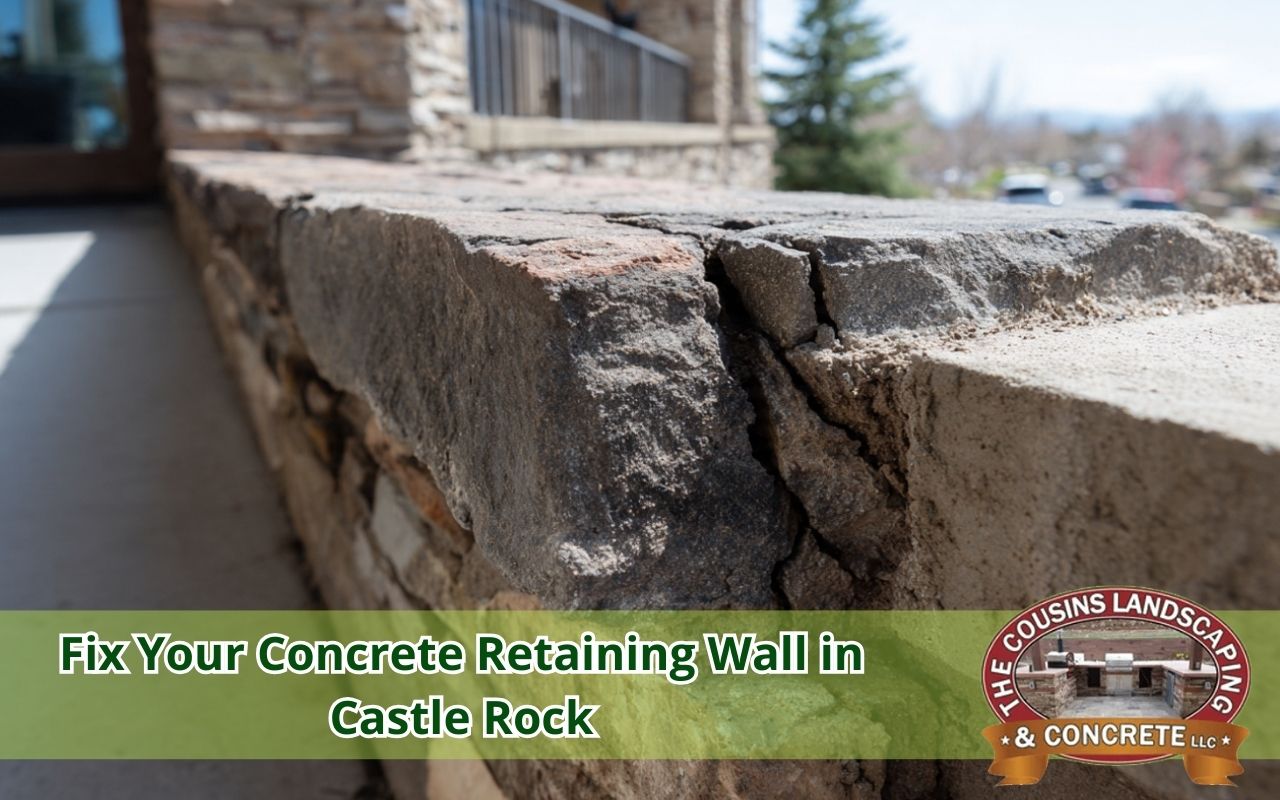
Revive your Concrete Retaining Wall Repair in Castle Rock by dealing with time, weather, and long winters. In Castle Rock, temperature swings and ground movement can stress walls that should last.
However, many cracks and shifts improve with smart repairs. Focus on drainage weeps, reset cap stones, and learn how the local frost line affects stability. With practical steps, Concrete Retaining Wall Repair in Castle Rock can feel simpler and more cost-effective than a full rebuild.
Assess the Current Condition of Your Wall
Start Concrete Retaining Wall Repair in Castle Rock by checking the entire wall. Look for cracks, bulges, and leaning areas. Even small cracks can grow when water enters and freezes. Also, check spots where soil pressure seems uneven.
Next, inspect the top edge for loose or chipped cap stones. Use a level to spot tilting, and a straightedge to find surface dips. Then, check for clogged drainage weeps and soft soil at the base. Write notes so you can track changes over time.
- Walk the full length and mark problem areas
- Check crack size, wall lean, and bulging sections
- Look for blocked drainage weeps and wet soil
How Castle Rock Weather and Ground Movement Affect Walls
Castle Rock freeze-thaw cycles push moisture into small cracks. Then, when temperatures drop below the frost line, that moisture expands and makes damage worse. As a result, sections can lift and shift out of line.
In addition, seasonal rain can soak soil behind the wall and raise pressure. Ground settling also matters. Over time, small shifts can weaken joints and move blocks. Therefore, good repair plans must consider moisture control and soil stability.
Why Proper Drainage Matters for Long Wall Life
Good drainage reduces pressure behind the wall. When water pools, it adds force and can widen cracks. That is why drainage weeps help. They let water escape and lower hydrostatic pressure.
Also, keeping water moving prevents bulging and bowing. You can clear weeps, add gravel, and use perforated pipe to guide water away. If you want design inspiration that also supports smarter water flow, review these retaining wall ideas in Castle Rock.
- Keep drainage weeps clear of soil and roots
- Add coarse gravel behind the wall for better flow
- Use perforated pipe to carry water to safe exits
Fix Cracks and Improve Wall Strength
Fix small cracks early to avoid bigger repairs later. First, clean the area and let it dry. Then, use a masonry filler or exterior concrete patch for hairline cracks. For wider gaps, use an outdoor crack sealant for concrete.
However, bulging or leaning walls may need more support. Options include geogrid or tie-backs to anchor the wall into stable soil. If you are comparing wall types for future projects, this guide on brick retaining wall cost factors in Colorado can help you weigh long-term choices.
Reset Cap Stones and Fix Misalignment
Cap stones protect the wall and improve curb appeal. Yet, they can shift over time and leave gaps that invite water. Start by removing loose cap stones. Then, scrape off old mortar and debris from both surfaces.
Next, set a fresh mortar bed or adhesive. Place each stone carefully and use a level for even lines. Finally, tap with a rubber mallet to lock them in place. This step supports Concrete Retaining Wall Repair in Castle Rock by limiting water entry at the top.
Pick Materials That Hold Up in Castle Rock
Material choice can make or break a repair. For crack filling, choose an exterior-rated patch or sealant. For cap stones, use mortar that fits the wall’s texture and color. If blocks must be replaced, match the original size and thickness.
Also, use landscape fabric behind gravel to reduce clogging. Choose perforated pipe made for outdoor drainage. Since the frost line can be deep, check labels for frost resistance. When planning other upgrades around your yard, consider how multi-level patios can help manage grading near retaining walls.
- Exterior concrete patch or sealant for cracks
- Frost-resistant mortar for cap stones
- Gravel, fabric, and perforated pipe for drainage
DIY Repairs vs. Hiring a Pro
DIY works well for minor issues. For example, you can clear drainage weeps, seal small cracks, and reset a few cap stones with basic tools. With clear steps, these jobs can fit into a weekend.
Still, major bulging, wide horizontal cracks, or severe leaning usually need a professional. Pros understand soil anchors, deeper drainage, and structural support. If safety is a concern, hiring help can reduce risk and protect your property.
Preventive Maintenance to Extend Wall Life
Regular checks keep small issues from turning into major damage. At least twice a year, clear debris and remove plants that trap moisture. After heavy rain or freezes, look for new cracks and movement.
Also, keep drainage weeps open and make sure water flows away from the wall. Refill settled areas at the top, so runoff does not pool. A breathable masonry sealer, applied every few years, can reduce moisture while letting vapor escape.
Frequently Asked Questions
How do I know if my wall needs repair or replacement?
If you see bulging, severe leaning, or wide horizontal cracks, it may need more than a simple repair. Smaller cracks and minor movement often respond well to targeted fixes.
Why are drainage weeps so important?
They release trapped water behind the wall. As a result, they lower pressure that can cause bowing, cracking, and long-term failure.
Does the frost line in Castle Rock really matter?
Yes. Freeze-thaw cycles can push moisture into cracks and expand damage when temperatures drop below the frost line, which can shift sections out of place.
What is the best way to reset cap stones?
Remove loose stones, clean old mortar, apply fresh mortar or adhesive, and set each stone level. This helps block water entry at the top edge.
Can I handle Concrete Retaining Wall Repair in Castle Rock myself?
Yes, for small cracks, blocked drainage weeps, and minor cap stone issues. However, leaning or bulging walls often need professional support systems.
Plan Repairs That Last in Castle Rock
Concrete Retaining Wall Repair in Castle Rock becomes easier when you start with a clear inspection. Then, address the biggest risks: water pressure, freeze-thaw damage, and shifting soil. Keep drainage weeps open, seal cracks early, and reset cap stones to block water entry.
Whether you DIY small fixes or hire a pro for structural work, steady maintenance protects your wall for years. With the right materials and a plan built for the frost line, your wall can stay strong and dependable through every season.