
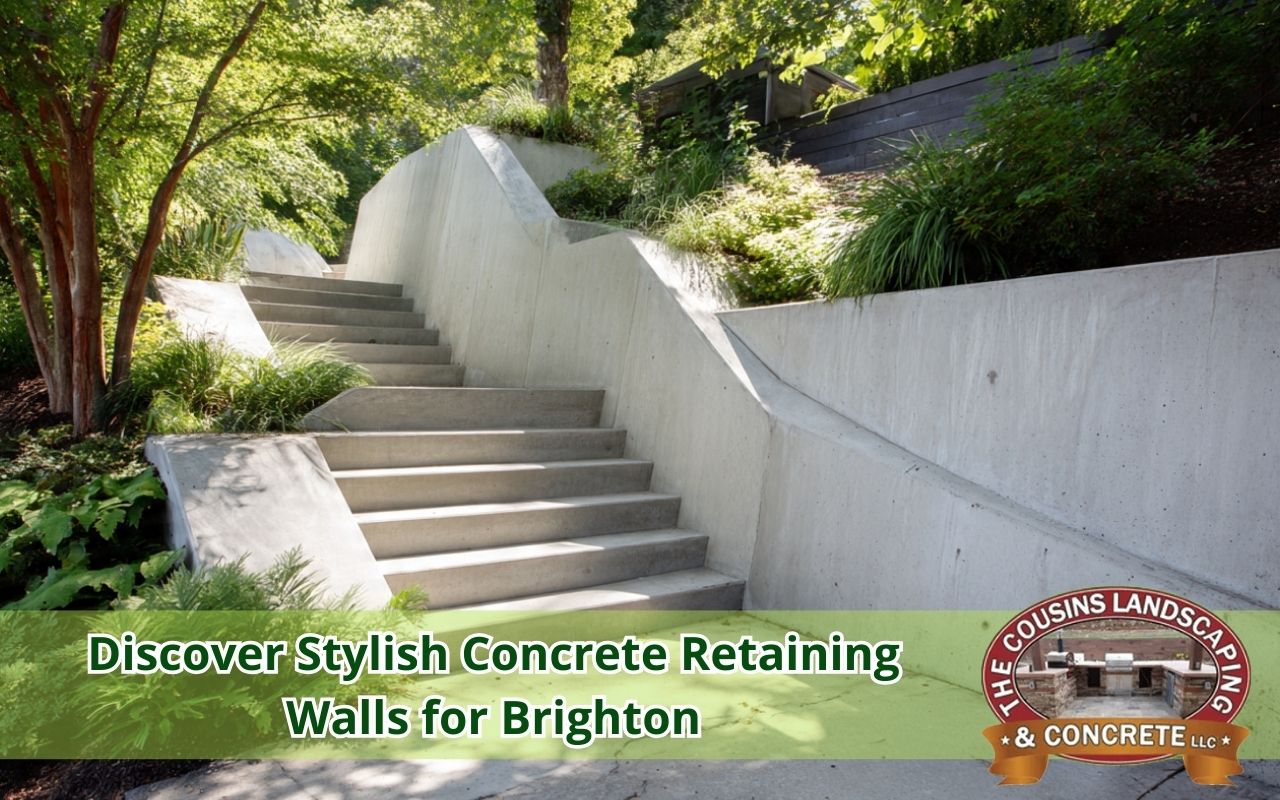
Concrete Retaining Walls for Brighton can reshape your yard with strength and style. They hold back soil, yet they also frame patios, gardens, and paths.
However, details matter. Drainage, efflorescence, and joints help prevent common issues and extend wall life. As a result, your outdoor space stays safe, clean, and easy to enjoy.
Factors to Consider Before Installing Retaining Walls
Start with slope and soil
First, look at your slope and soil type. Steeper grades need stronger builds. Softer soil can shift over time. Therefore, a basic soil test helps you plan for stability and water movement.
- Check slope changes across the site
- Confirm soil strength and drainage
- Plan wall height based on load
Choose finishes, plan permits, and hire well
Next, pick a finish that fits nearby stone or brick tones. Also, confirm local permit rules for taller walls. If the wall supports a fence or drive, engineered plans may be needed. For guidance on local builds, review concrete services in Brighton, CO.
Importance of Proper Drainage in Concrete Retaining Walls for Brighton
Poor drainage is a top cause of wall failure. Water builds behind the wall and adds pressure. Consequently, cracks and bowing can follow. Weep holes, gravel backfill, and drain lines reduce pressure and protect the base.
- Add weep holes to release trapped water
- Use gravel backfill to improve flow
- Install a drain pipe when water is heavy
Efflorescence: What It Is and How to Prevent It
Efflorescence looks like a white powder on the surface. It forms when moisture brings minerals up as it dries. While it is not a structural threat, it can hurt the look. Therefore, improve drainage and use a breathable sealer. For light buildup, scrub with water and a stiff brush.
Why Joints Matter for Long-Lasting Walls
Concrete moves as it cures and as temperatures change. Control joints and expansion joints guide that movement. Without them, random cracks can appear. Additionally, keep joint sealant in good shape. Fresh sealant helps block water and reduces freeze-thaw wear.
Blend the Wall with Brighton’s Landscape
To keep the wall natural, choose calm tones and simple textures. Then, use gentle curves to follow the land. Moreover, add shrubs or trailing plants along the top edge. If you have rock features, set a few boulders into the face. This approach softens lines and ties the wall to the site.
Design Details That Boost Curb Appeal
Texture can turn plain concrete into a feature. For example, exposed aggregate shows small stones for a natural finish. Stamped patterns can mimic wood or brick. Also, subtle pigments can match fences or trim. If you are comparing styles, explore brick retaining wall cost factors in Colorado to weigh design trade-offs.
Longevity and Maintenance Tips for Concrete Retaining Walls for Brighton
Small checks prevent big repairs. Look for hairline cracks, stains, or failing sealant. Also, keep drainage paths clear behind the wall. A protective sealer can reduce moisture absorption over time. For hands-on help with long-term care, contact The Cousins Landscaping Concrete LLC.
- Inspect joints and replace worn sealant
- Clear debris from drains and weep holes
- Clean algae, dirt, and light mineral haze
Common Problems and Practical Fixes
Bulging or tilting often points to trapped water or a weak base. So, improve drainage and replace backfill with crushed stone. Spalling can happen with freeze-thaw stress or chemical exposure. In that case, remove loose material, patch with a matching repair mortar, and seal the surface to slow future damage.
Balance Strength and Style
A great wall manages soil and water while looking polished. Therefore, pair smart drainage with well-placed joints and solid reinforcement. Then, add curves, lighting, or texture for a clean finish. When these choices work together, the wall feels built-in, not added on.
Frequently Asked Questions
Do retaining walls always need permits in Brighton?
Not always. However, taller walls or walls supporting extra loads often need approval. Check local rules early to avoid redesigns later.
How long do Concrete Retaining Walls for Brighton usually last?
With good drainage, sound joints, and routine care, they can last for decades. Additionally, sealing and inspections help reduce weather wear.
What is the easiest way to reduce efflorescence?
First, limit moisture movement through the wall. Improve drainage and use a breathable sealer. Then, clean light deposits before they build.
Where should weep holes go?
They typically sit near the base to release trapped water. Also, spacing matters, so water can exit evenly along the wall.
How do joints improve the look of the wall?
They guide where movement happens, which limits random cracks. As a result, the face stays cleaner and easier to maintain.
Timeless Beauty and Everyday Value
Concrete Retaining Walls for Brighton support slopes, reduce erosion, and improve outdoor layout. By focusing on drainage, efflorescence control, and joint care, you protect both appearance and performance. Consequently, the wall stays strong, blends with your landscape, and boosts curb appeal year after year.